Friday, March 24, 2006

Ice walkers 2006

A selection of pictures from our Chadar 2006 trek...details of 2007 treks can be found on project-himalaya.com
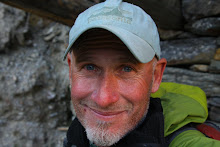
Joel


Left, Lingshed lady en route to a Losar (new year)
party, below, the bridge we cross every summer over the Zanskar below Neraks


Right, Denio and Raquel on the way to Lingshed village


left, moving gear along a narrow ice shelf; note the slush on the water surface gradually building up to freeze up


Walking on (frozen) water


The Chadar trek in Ladakh, NW India, is probably one of the hardest but most rewarding treks in a region known for the severity of its winters.

Traditionally most treks in this Tibetan region follow old trade or pilgrimage routes, and the Chadar ('White veil') is taken by Zanskaris in years past to trade butter, a product of their summer farming; but not able to travel in the heat of summer.

Most accounts of this journey are of the 'oh how we suffered' type, even when walking the route you will meet trekkers who constantly tell outrageous lies about the temperature (minus 40 was the biggest fib).

What they do not tell you is the stunning beauty of the ice, the friendliness of the Zanskaris, and the chance to witness a people whose winter life style has changed little for years.

Thank you Brian, Lobsang, Stanzin, Norbu, Ben, Peter, Denio, Laurence,
Diane, Tad, Markus and Christine for your great company on my four treks into Zanskar in winter.

Something Hidden

Something Hidden
By Joel Schone
‘Something hidden. Go and find it. Go and look behind the ranges. Something lost behind the ranges, lost and waiting for you. Go.’
Rudyard Kipling
The Himalaya is multi-layered. In the geographical sense, a barrier on which dreamers and explorers would project their aspirations and ambitions, their light spilling over to illuminate succeeding valleys as they followed in the steps of early traders and pilgrims. Many of them, thinking that first pass was the key to fame and fortune, would turn back in despair seeing the complex sea of peaks, passes, and valleys before them.
Like a young man mistakenly thinking the beautiful woman he fell in love with was the appearance, the all, and shocked when he found there was layer upon layer of intelligence, dreams, and ambitions there and not just someone to project his ego upon. The early romancing was just the first pass. To truly love her and to share a life he would come to know her complexities, moods and seasons of the heart.
That first sight of the magnificent ranges across the horizon is just the start. True love comes with days beyond there, discovering the villages, peoples, and faiths that follow the seasons. Time to appreciate the rhythm of life in the villages of Ladakh and the smell of burning morning juniper in a Nepali hill village, and if, like I, you are blessed to take many people to these places, time to appreciate it through the eyes of others.
Multiple layers; the tourist Himalaya of photogenic passes and peoples the trekking groups pass through. At times an act, an idyllic Shangri la with the faithful Sherpa guide playing up to the role assigned to him of amiable workman, no sign in him of the same demons and loves that drive us all. In the pictures the sun always shines; and on the trail the Sherpa children learn the cute ‘I am pen’ will often get them one.
Peel away this alluring façade like a schoolroom transfer and you find cultures and traditions timeless. That cheeky Sherpa child may be wearing a Chicago bulls cap and jeans, but his communal family room is laid out in the same way his ancestors before they fled from Tibet to sanctuary under the shadow of Kumbila, the sacred Sherpa mountain, hundreds of years ago. And if you call in for tea at his house and are feeling in a sprightly mood, don’t whistle. They believe it attracts evil spirits.
The trade and pilgrimage routes along which Buddhism and all its art forms spread criss-cross the ranges, and are still there, from Western Ladakhi salt traders to wool coming into the Nupri valley in Nepal’s Manaslu district.
Above all though, as you move across the ranges looking for something hidden, in Kiplings’ phrase, you will find a common bond between the ‘Tsampa eaters’ the Tibetan peoples whose religion, is, more then any other on earth, closely tied to its harsh environment among these high places.
As we move through the landscape our day becomes like a colour print slowly coming into clarity in a developing tray. As we look, if we truly see, the whole world, a whole lifetime and the history of a people, is revealed in the multiple colours and activities of a harvest day in Ladakh or the silver and turquoise in a Zanskari Perak, the classic wedding head dress of the region.
High above the trail from Lukla to Namche Bazaar in the Everest region, we sit at puja in the 500 year old Gompa of Gomi La. Leaving, we can see far below the throng of brightly clad trekkers heading up to base camp, for most, heading with fixed intent for their goal, unaware of this beautiful piece of history above them.
The ancient fort of Zangla sits, apparently derelict, above the kingdom it once governed. Trekking groups pass by. We tiptoe up across the ancient floors and there revealed Alexander Csoma de Koros study. The Hungarian scholar and globetrotter spent a winter here in the 1820s drinking salt tea and making an extensive study of Tibetan.
A 17-year-old American student starts the trek across the Changtang loud and obnoxious, extolling the virtues of NY delis and deriding the apparent poverty of this place. As the trek progresses, he falls more and more silent every day. Crossing a hill, I spy him sitting cross-legged on the high plain, marveling at the vastness of his planet.
Bus and jeep loads of tourists heading for the colourful carnival that is Leh in summer drive the last 200kms to the capital. They listen to their walkmans, pass joints around and rehearse their horror stories of the bus journey. A few kilometers off the road, unseen, as around us nomads tend their flocks and cut wool from their pashmina sheep, we take curd and salt tea in one of their yak hair tents.
A young American woman on her first trek in Ladakh doodles the greeting ‘Kamzang’ in her diary. Crossing a knoll to the beauty of Lake Tso Moriri, she shrieks with delight at the sight of nomad tents with herds grazing around them. Two years later she shepherds her own group across the plateau and is known to every trader in Leh.
As our horse caravan comes over the horizon behind our trekkers realize camp and dinner is near, there is a sense that a whole life has been lived, and a whole history unraveled, since our cook Tenpas’ laughter in the dawn chilled kitchen tent signals the day break.
Being among these places and traversing both ranges and cultures has taught me that there is nothing simple, nothing ordained in this life. You can cross any pass if you have the spirit, and the appearance of a person or place tells nothing of the spirit and complexity hidden within.
Above all, if you spend time in these places, you will find something hidden in yourself.

‘What is important cannot be seen’
The Little Prince

Ball of wool in Zanskari house; Lingshed, Ladakh, January 2006 Posted by Picasa

Joel leading his fourth Chadar trek along the frozen Zanskar river, January 2006 Posted by Picasa

Singge's Story

In 2001 Kim, Dave, Lucas, Lara and Lisa and I came across a boy in a remote village.
This is his story...
Singge: from Zanskar with love
By Joel Schone
May 2001
A boy: looking like a 6 year old, but with an old and sad face. Eyes with the look a dog gets when its been beaten, wary and watchful. Both ears set at odd angles on the head, like they had been pulled so often they gave up the struggle to stay straight.
Tetha: a lovely village set in green barley fields, in winter cut off like all of Zanskar cut off by frozen passes, the only access by walking along the frozen Zanskar river.
The boy stood away from the other children, watching the carnival of colours and laughter that was our trekking group. Kim had pointed him out - he wore a T-shirt, no shoes or pants. Lobsang, our sirdar, always attracted to the strays and needy of the world, told us he had no family. Lobsang fended off the other children when one struck Singge, gave him clothes, dinner, and set him to work fetching and carrying in the kitchen.
A villager told us he had been a novice at Phuktal, but had been so badly behaved he had been thrown out. Now he was returning to his half brother at Kargyak. That night, with a neediness born of more than hunger, he heaped sugar into his tea and munched chocolate. We would be passing through again in September, and when I asked Lobsang if it would be a good thing to get him sent to school, Lobsang was positive. "Good thing".
More treks and trekkers, Tso Moriri, the Changtang, and finally in Manali, set among the forested slopes of the Pir Panjal, Lobsang and I found time to track down a school created for Zanskari children. Earnest eyed and be-uniformed, we watched their lessons, the patience of their teachers, gave formal "jullay" and we had found a home for Singge.
September 2001
Resting in Kargyak after the crossing into Zanskar, we found Singge was half brother to Lobsang, the village policeman. As my group drank chang in his house, we heard his story. Singge had been born out of wedlock to a fairly wealthy village landowner, his own wife having passed on. He stayed with his mothers family, until the father died, when the family washed their hands of him. His mother was blind, and her entreaties to keep the boy were ignored. For two years he lived wild, looking after sheep for village families, and like Kipling's Kimball O'Hara, learned to survive at an early age, by turn begging and entertaining, stealing and lying. His sensitivity to cold and his damaged toes came at this stage in his young life.
Finally his half brother got him into Phuktal Gompa, but too late. Already used to grabbing what he could and stealing, he was thrown out. Tashi, a Rimo guide and firm friend, French and English speaking, translated this with horror for us.
Finally Singge was ushered in, giving us formal Jullay, blinking and nervous in front of so many round eyes. He was dressed in a borrowed Goncha far too big for him, and had attempted to slick down his hair with yak butter, lumps of which were matted in his hair. Lobsang gestured at our group and asked him if he remembered us; he looked at the group and his answer had Lobsang and Tashi laughing "he says he remembers me and you, but the others have changed a lot".
The next day we had to get his mothers permission, and sat and explained slowly as the villagers harvested all around us; would she give us permission to send Singge to school? Unable to read or write, the school had told us they would trust our word that she had given it, but she clung to our hands and cried and cried, until finally Lobsang told me she had given her blessing and I could get away from the sight of tears flowing from blind eyes.
Jan 2002
So, we had made a promise, Singge would go to school next year. Early in the new year, we were walking along the frozen Zanskar, and in the back of my mind, I planned to push through the gorges and get to Kargyak. We had promised spring, but I knew, survivor as he was, another winter could be the end of him.
Leaping broken ice, sleeping in caves, and marvelling at Zanskar in winter, we made it through the frozen gorges in early February, despite the heaviest snow in 12 years. Only 2 more days would see us in Kargyak, but the Tsarap Chu does not freeze as hard as the Zanskar. Using Plastic boots and ice axe we could do it, but one day out of Padum I looked at the avalanche slopes above the river and heard that even locals would not go. A week later we were in Delhi.
May 2002
We had a group planned for early June, though in late April the road over the first pass was still closed. Leading a trek in the Everest region, I heard that two trekkers were keen to cross Zanskar in early May. "Not possible" I thought, then for Singge to go to school. The others, Don and Lou, both said they were up for an earlier start, and it was all on.
By early May we were jeeping up the Rohtang pass, 17 porters, and 5 trekkers. To get across the frozen passes, Tsarap and our horses would cross the frozen slopes by moonlight, and catch us at Kargyak village.
Five days later, and an epic freezing crossing, we were in Kargyak. An hour or two after we arrived, Singge arrived, jumping like a cat every time someone came close to him, nerves on edge. He was covered in lice, his threadbare Goncha infested. Lobsang washed him and his head was shaved, every stroke of the blunt blade making him flinch. It was hard to hold back tears as old scars were revealed, he had been beaten since he was old enough to walk. Dressed in his new clothes, it was all too much for him, he was all hands, grabbing food, equipment, overeating, fighting with local kids then running to hide behind us. He was used to living on his wits, and it was hard to get out of the habit. Lobsang and Tenpa, and our trekking group, had endless patience, and he-slowly-started adjusting to his new life.
As we left Kargyak a party of returning men on horseback all stopped to formally shake hands and bid him goodbye; and from the village on the other side of the river children waved, shouting "Singge, Singge!"
That first day we realised his frostbite-damaged feet prevented him from walking far. Tsarap, our horseman, allocated a horse and got his helper, Pinku, to look after him. So excited he would throw rocks, fall off, hurl one of my water bottles over a precipice to watch it bounce. When Tsarap told him to behave, he would scream "Balti! Balti!" to Tsaraps' sun and snow blacked face.
In the morning I would learn to be there when he woke up; he would start to cry as his feet so damaged were slow to wake up. First, though I would have to clear away the chairs and tables he would block the tent door with, to stave off night time terrors. All this would have kept me busy, but more worryingly, we were approaching the Singge, "Lion" pass, at over 5000m, easy in summer but I knew from our experiences on the Shingo la earlier it would be a hard crossing. It would be covered in snow, and we had to get loaded horses across.
A yak caravan had attempted it recently, and had failed. We were up at 4am, it had been snowing hard all night. By 5am we were moving, trekkers looking back across a snowscape straight out of a Scottish winter. Peter and Susan dropped their camera and it bounced away down valley, and there was no time to get it, we had to keep moving. By the top of the pass one horse had already tumbled, Tsarap coolly grabbing its halter and choosing to go down with it, tumbling end over end until he pulled the slipknot and the load slid clear, seconds from the edge.
Then we were on top, trekkers moving down quickly. The guys and I stopped, crouching out of the wind and Tsarap passing out the bidis (local cigarettes). Definitely a 3 bidi problem as we smoked and looked at the steep icy slope. There was a suggestion of a trail in the ice... First, the loads came off, Singge screaming in delight as duffels tents and boxes slid and crashed down the hill, me grabbing Singge out of the way of one about to cream him.
I climbed back up and watched as the Lobsang and Tenpa slowly coaxed a horse onto the big unfolded kitchen tarp, looking for all the world as if they were going to gift wrap it. Then, they took corners of the tarp and slowly started to drag it down the insane trail. Tsarap and Punsok gently clicked their tongues and the other horses, seeing what was apparently one of their own going down, followed. Horse psychology...
There was still 2 kms of soft snow to go, and the horses could not do it loaded. so the gear was loaded on two tarps and wrapping ice axes around to get purchase we started dragging it all, floundering and slipping in deep powder, looking like Captain Scotts' doomed polar explorers. Singge sat on top of the loads, shouting encouragement and running after pots and pans as they tumbled off. I think that day marked a turning point for Singge, as it was for me. Watching Tsaraps tumble and with freezing toes and burnt faces getting over that pass I realised these guys were more than employees, that I was blessed the day I met them, that our treks were more than a job. And Singge, I think realised it was true, that we had kept our promise and we would never let him down.

The Chadar 2002

The Chadar 2002: Fire and Ice
by Joel for Kim

Some say the world will end in fire, Some say in ice.From what I've tasted of desire I hold with those who favor fire.But if it had to perish twice, I think I know enough of hateTo know that for destruction ice is also great and would suffice.
Robert Frost


First, it was overcast, which meant the temperature rose evenly as the day progressed, in light or shadow, an even thaw; no silent gliding through the subterranean blue light at the bottom of the gorges and joyous shooting into the sun, instead, a layer of water over slick ice that could set you spinning like some crazed Pinocchio, arms and legs flailing foolishly. No pleasant snow crust to hold your feet in place but icy slush that soaked your boots and froze your toes. Then, we passed springs feeding into the Zanskar, but warmer, disturbing the ice, setting it creaking and groaning, normally safe ice could not be trusted-and this stretch narrowed and curved snake like, causing weird pressure bumps piles of clear icy plates at the edges, with powder snow covering brittle ice that dropped you a foot with a crack that echoed from wall to wall as the ice around you fractured.. not a good day.
Then, daydreaming of summer Zanskar, a slip, and I spun 180 degrees, desperately trying to move my pack to cushion my fall on the hard blue ice, nearly make it but as I hit my stick handle comes between my elbow and me and my whole weight goes on it, an effective kidney punch, and I kneel sobbing with pain on the ice as I fade in and out of consciousness, knowing from past experience I had cracked some ribs. And then the ice shelf we were following turned to mush and we were forced high above the Zanskar on awful black, slick rock, almost crying with frustration trying to force cramping limbs into non existent holds, chilled by a freezing wind which now starts. At last onto good ice, breathing slowly to try and ease the pain in my ribs-and then Punchok and Rinchen start to shout and they are running to the next bend, legs milling and sliding, sledges crashing behind them to the other porters who are throwing tsampa into the wind, "sho sho shaay" echoing from the gorge walls. The older porter, Sonam, puts a spring of juniper with a strip of prayer scarf around it in my hat, gripping my shoulder, and I look up to where he points, a string of prayer flags cracking in the wind across the gorge, and I point upstream and shout "Zanskar?" into the wind and they all shout, laughing, "Zanskar!"
I am laughing now too, making my ribs hurt more, tears of pain in my eyes mixing with windblown tsampa, and I crouch down on the ice to ease the pain and clear my eyes, no longer cursing the wind which freezes my tears, because it blows from Zanskar.


Now it was time to head back to T'chadar and I didn't want to go. I had jumped at Brian's request for an extra day in Karsha: unrealistic romantic that I was, I so much wanted to stay and wait for spring. The Himalayan barrier and the Zanskar range, the limits of the kingdom of Zangla, defined my world and were the only horizons I wanted: a warm stove, salt tea, and thick yeasty chang all I desired. But the horses Lobsang had picked to carry us to the ice were in the yard below and we were packed for an early start.
That last afternoon we climbed to the monastery, looking back every few steps to the blue white panorama unfolding behind us, and sat at the back of a puja, leaning against a wall worn smooth by centuries of worship. Here now 100 monks chanted softly, illuminated only by a single window framing snowy peaks, and as the puja progressed and our last afternoon became evening the sun marched across the room picking out images to speed us on our way, I look up and the sun is catching the face of a 10 year old in the back row, eyes round with concentration as he strains to hold up his brass gong, every ounce of his being focused on his part in the ritual. Light slanting through the steam rising from the monks' tea bowls, distributed to them, and me, by a grinning novice who trips, giggles, and is silenced by the tolerant smile of an elder, and as I sit warming my hands on my tea bowl, almost as if on cue to complete the scene, the entry curtain pulls aside and two sheepskin clad Zanskaris enter in a flurry of snow, prostrating themselves before settling next to me with hushed greetings.
All of this, ranks of monks wreathed in frosty breath as they chant, I have been here so many times, but its like I am seeing it for the first time; and more, some feeling I cannot quite place. Things exactly as they should be? Being exactly where I want to be; so many connections from end to end of my home the Himalaya, from the prayer beads I count off, a present from the Khumbu, to the kadar (kata: ceremonial white silk scarf) I drape around the maitreya, a present from Kim, this journey had given me such a feeling of continuity as I entered my 50th year. So many miles since I walked to Phaplu a year ago; so many wonderful moments with so many friends, here they say every breath is prayer, and as I rose and made my goodbyes, a simpler one then the ancient ones all around came to my lips. Let me come back.


"Downhill, easy days" Lobsang had said, and we must have only remembered the falls and the bad ice, we found we were at home on the frozen river, and with the wind behind us the Zanskar blessed us with clear skies, peaks reflected in smooth ice, moments when you glided along, forgetting the river beneath. Sublime moments, the bright turquoise Zanskar emerging roaring from the ice, gusts of wind scattering thousands of ice crystals across blue ice, tinkling in front of you magically, turning a corner to a flat sheet of green ice stretching to the next bend with the impossibly sheer faces of Zanskar peaks leaping straight out of it, Moments when you would lie and gaze down into the ice as the sun hit it, taking in all the shapes, colours and shades. And the Zanskaris, sometimes 100 or more in a day, joyously returning from Bodgaya, in single file with that crazy side to side seven dwarves gait we could never mimic, bundled in gonchas (traditional overcoat), kids sliding around them, "jullay" like gunshots crashing from wall to wall.
There always seemed to be a hand extended to me when I fell, always seemed to be hot tea appearing from somewhere, always seemed to be a place by the fire in the soot begrimed caves at the end of our days. And then the moment I had been dreading, turn the corner and the jeep sat high above the ice waiting. I stepped from white ice to blue, slid easily into the centre of the river and froze suspended over the Zanskar, looking down into the turquoise depths. Whorls and circles like the inside of a childhood marble, and stones and pebbles suspended in mid ice, perhaps ones I had thrown in over the years, wishes for things I never really needed or wanted, as I really had it all, and never even knew it.
A "thok" of a Zanskari pole sounding the ice echoing down the valley jerked me back to reality, and I looked up to see Lobsang grinning with delight at the sight of me day dreaming again. OK Lobsang, I'm coming.


The last few days in were a whirl of visiting gompas, some I had not seen for years, caught up as I always had been in treks, groups and careers; but on the Chaddar every night by the fire I had waded in deep concentration through books I had not read for years and for some reason my normally cluttered head put in order all my understanding of Ladakhi history and its religion, and I found myself in Matho, Stok, and Stakna able to make sense of it all. Every day the jeep would be waiting outside, and pausing only to pick up hot bread from chang gali we headed off.
On our last day in Ladakh, coming back from a weekend in Alchi and Lamayuru we climbed the steps to Basgo, Jamgyal Namgyal's ruined fort high above the Leh Srinagar highway. A huge convoy of army trucks roared past with ground shaking rumbles, but as we got higher another noise vied for our attention, and on the last corner as the fort came into sight the sound was identified, 10, 20, 30, nomads from Changtang, aprons over their gonchas, prostrating themselves as they circled the gompa, singing clearly, with a cadence that was common to all of Central Asia, from Kashgar to Kinnaur, rising and falling joyfully, a world way from the sonorous chanting of the puja, slowly drowning out the roar of the trucks until they faded away and only the singing remained.
I sat amazed at this ancient ritual (too amazed to even get out my camera!) watching them disappear into the gompa, then continued my climb, to the uppermost Maitreya chapel. I had forgotten what was special about this; unlike most gompas, skylights in the roof allowed enough daylight in to view the beautiful Maitreya clearly. I sat at its feet as Lobsang and our driver prostrated themselves and as I watched the harsh morning light brighten the serene features of the Maitreya, the word I had been looking for, what I had to hold onto in the next few months away from the only place in the world I really felt happy in, was there, what my winter in Ladakh had given me;
Illumination
"This is the stream of Zanskar, my home; flowing impetuously, foaming and roaring. But my love, if you pass by, for you it will run gently and slow."
Zanskari song

Welcome...

Kingdoms in the Sky is a collection of my writing and photographs of twenty years of Himalayan travel. As this goes up, I am finishing a short bicycle trip in the south of India, and soon heading up towards the Nanda Devi region of the Himalaya...my first addition is my Chadar diary from 2002. Enjoy and see you in the wild places!
Joel

Kingdoms In The Sky

Words and images from the roof of the world